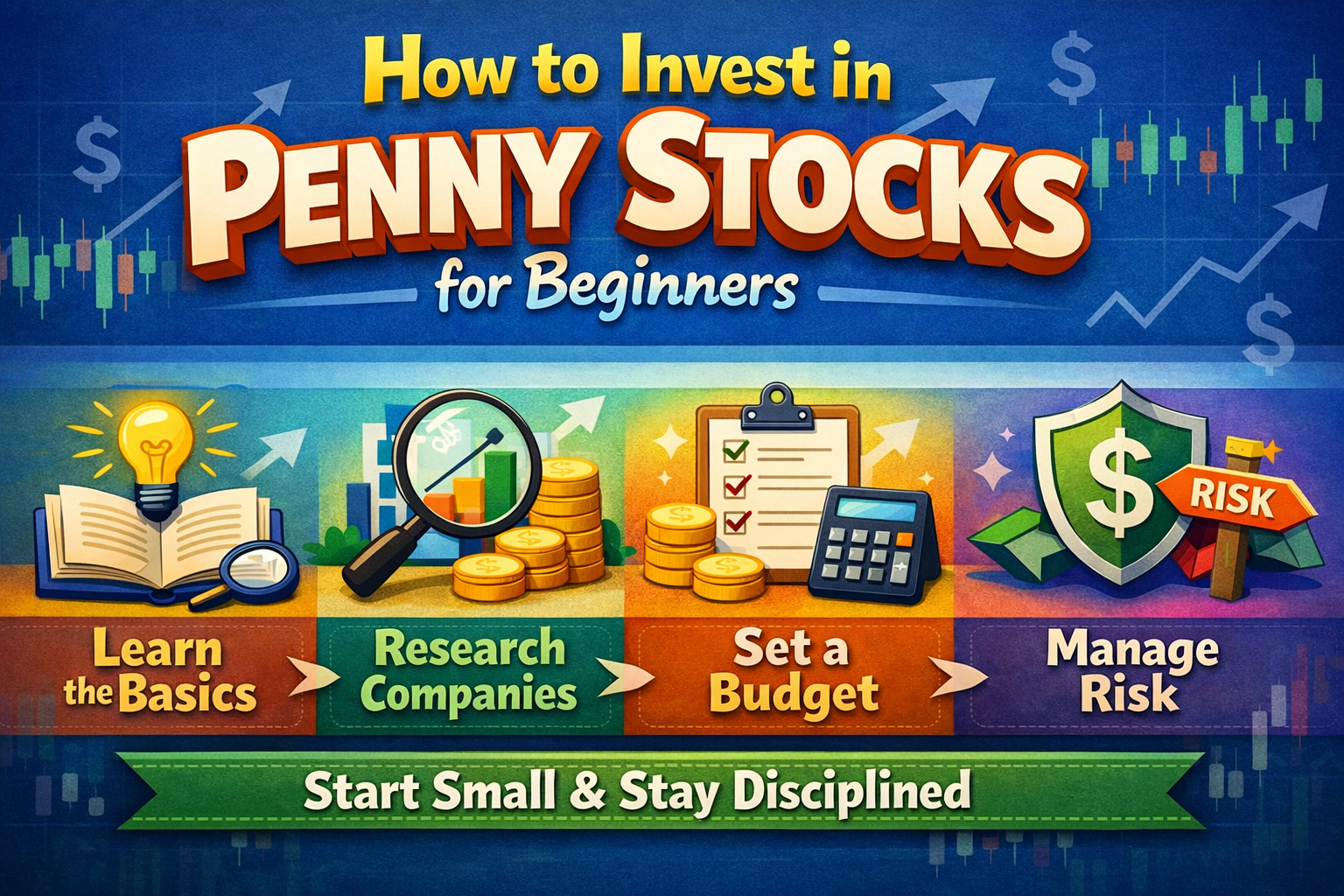
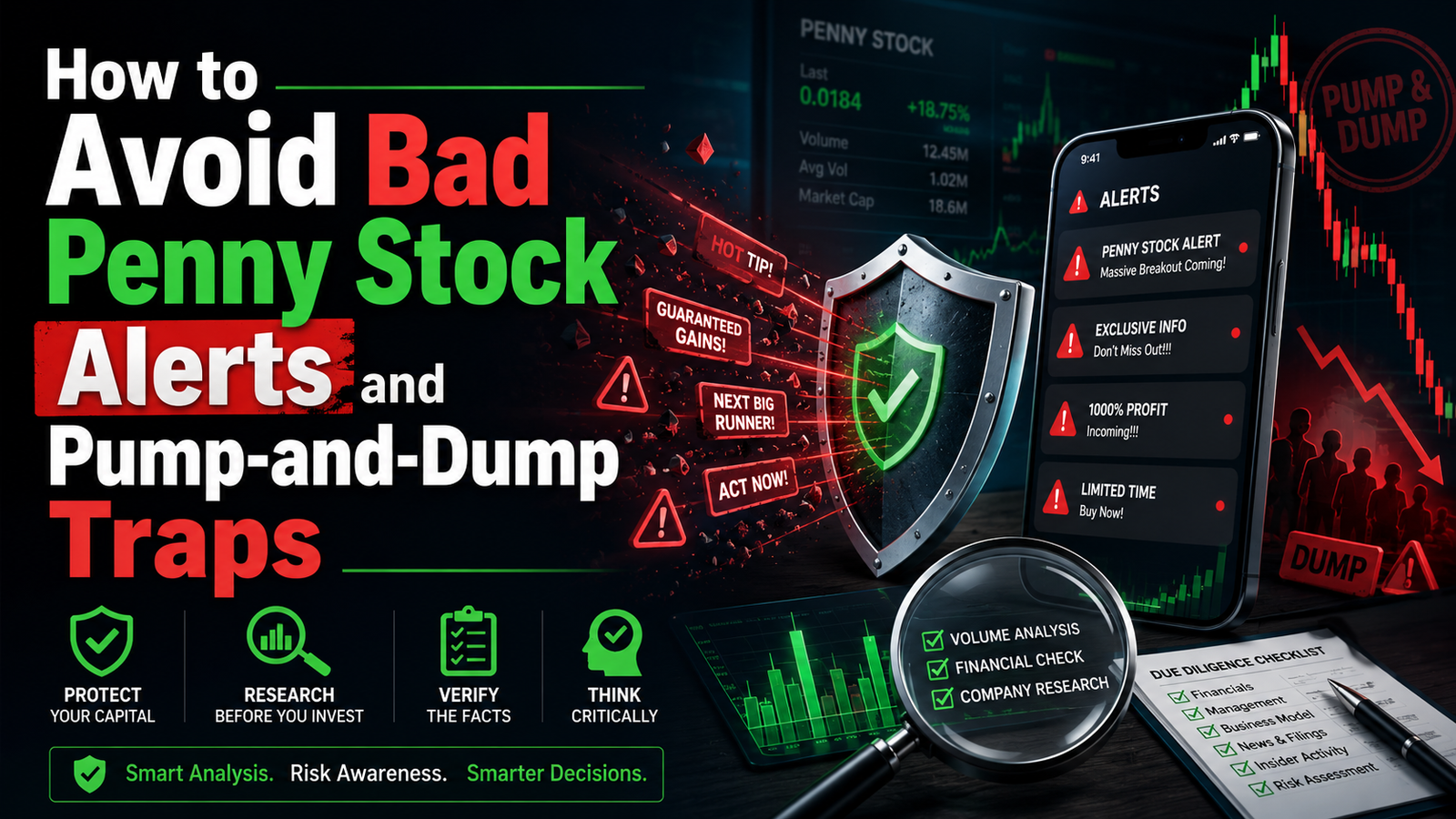
Penny stock alerts can look exciting, especially when a stock starts moving fast. A ticker appears in a chat group, a message says the stock is “about to run,” and suddenly everyone feels like they need to buy before it is too late.
That is exactly where many beginner traders make mistakes.
Not every penny stock alert is useful. Some alerts are based on real trading setups, volume changes, market momentum, or news-driven movement. Others are just hype. A bad penny stock alert can push traders into weak setups, late entries, poor exits, or pump-and-dump traps.
If you want to trade penny stocks, you need more than random ticker symbols. You need context. You need to understand why a stock is moving, where the risk is, and when the trade no longer makes sense.
This guide explains how to avoid bad penny stock alerts, how to spot pump-and-dump warning signs, and how to use penny stock signals with a smarter trading process
What Are Bad Penny Stock Alerts?
Bad penny stock alerts are trading tips that push a stock without giving enough useful information. These alerts usually focus on hype instead of trade structure.
A weak alert may say:
“Buy this now before it explodes.”
That kind of message does not help you understand the trade. It does not explain the setup, entry area, exit plan, risk level, volume, or catalyst.
A better penny stock alert should help you understand:
- Why the stock is getting attention
- Whether volume is increasing
- What price area matters
- Where the risk starts
- What type of trade it may be
- When the setup becomes weak
The goal is not to follow every alert blindly. The goal is to use penny stock alerts as trade ideas that you can review with logic.
Why Bad Penny Stock Alerts Are Dangerous
The biggest danger is emotional trading.
Many beginners enter a penny stock because they feel they are missing out. They see other traders talking about the same ticker, the price is already moving, and the chart looks strong. Instead of checking the setup, they rush into the trade.
That is how traders get trapped.
Bad penny stock alerts can create three major problems:
First, they push traders to buy too late. By the time many people see the alert, the stock may already be extended.
Second, they ignore risk. A message that only talks about upside does not prepare you for what happens if the trade fails.
Third, they create false confidence. If an alert sounds too certain, beginners may take bigger positions than they should.
A good penny stock signal should help you think clearly. A bad alert pressures you to react quickly.
What Is a Pump-and-Dump Trap?
A pump-and-dump trap happens when a penny stock is promoted aggressively to create buying pressure. The price may rise quickly because many traders start buying at the same time. Then, early buyers or promoters sell their shares while new traders are still entering.
After that, the price can fall fast.
The problem is that the move often looks strong at first. The chart may show a big candle, high volume, and fast price action. Beginners may think the stock is just starting its run, but in reality, they may be entering near the top.
That is why you should never trust a penny stock alert only because the stock is moving. Fast movement does not always mean a strong setup. Sometimes it means the risk is already too high.
Red Flag #1: The Alert Uses Hype Instead of Reasoning
A bad penny stock alert often sounds emotional. It may use phrases like:
- “Guaranteed runner”
- “This will explode”
- “Buy before it’s too late”
- “Easy money”
- “Massive profits coming”
- “Next big winner”
This type of language is a warning sign.
No alert can guarantee profit. Penny stocks are risky, volatile, and unpredictable. Even a strong setup can fail if volume fades, market sentiment changes, or traders start selling.
A useful alert should explain the reason behind the trade idea. It should talk about the chart, volume, price action, news, momentum, or risk level.
If the alert only creates excitement but gives no real context, be careful.
Red Flag #2: No Entry or Exit Plan
A bad penny stock signal usually tells you what to buy but not how to manage the trade.
That is not enough.
Before following any penny stock trading alert, ask yourself:
- What is the possible entry area?
- Has the stock already moved too much?
- Where would the trade become risky?
- What is the possible exit zone?
- Is this a quick trade or a longer hold?
- What happens if volume disappears?
If you do not know your exit before entering, you are not trading with a plan. You are guessing.
A proper penny stock alert should help you think about both sides of the trade. Upside matters, but downside control matters more.
Red Flag #3: The Stock Has Already Run Too Far
One of the most common beginner mistakes is chasing.
A stock may already be up 50%, 100%, or more before many traders notice it. When beginners see that move, they think the stock must be strong. But a big move can also mean the easy part is already gone.
If you enter too late, you may be buying from traders who entered earlier and are now selling.
Before following an alert, check:
- Is the stock already extended?
- Is volume still strong?
- Is the price holding important levels?
- Are buyers still active?
- Is the move based on real momentum or just hype?
A stock that has already moved hard can still go higher, but the risk is usually bigger. That is why entry timing matters.
Red Flag #4: No Clear Reason Behind the Move
A good penny stock alert should have a reason.
That reason could be:
- Strong volume
- Technical breakout
- Market momentum
- News catalyst
- Sector movement
- Unusual activity
- Watchlist setup
A bad alert usually does not explain anything. It simply says the stock is going up.
That is weak.
Before entering, ask: why is this stock moving today?
If you cannot find a clear answer, the alert may not be worth following. Random movement can reverse quickly.
Red Flag #5: The Alert Ignores Volume
Volume is one of the most important parts of penny stock trading. Without enough volume, it can be hard to enter and exit properly.
A stock may look attractive because the price is low, but if very few people are trading it, you may get stuck. Low volume can also create large bid-ask spreads, which means you may buy high and sell lower than expected.
Before following a penny stock alert, check:
- Is current volume higher than normal?
- Are buyers active?
- Is the spread too wide?
- Can you exit if the trade goes against you?
- Is the volume real or just a short spike?
A big percentage move on weak volume is not always a strong signal. Sometimes it is just thin trading.
Red Flag #6: The Alert Creates Urgency
Bad alerts often try to make you feel rushed.
They may say things like:
- “Last chance”
- “Buy now”
- “Do not miss this”
- “Only smart traders are entering”
- “This is about to fly”
Urgency is powerful because it triggers fear of missing out.
But good trading does not come from panic. It comes from preparation. If an alert makes you feel like you must enter immediately without checking anything, step back.
The best traders do not chase every move. They wait for setups that make sense.
Red Flag #7: No Risk Management
Any penny stock alert that only talks about gains is incomplete.
Risk management should always be part of the process. You need to know how much you are willing to lose before entering a trade.
Ask yourself:
- What is my position size?
- Where will I exit if the trade fails?
- Am I risking too much on one alert?
- Am I entering because of logic or emotion?
- Can I handle the loss if this trade does not work?
Penny stock signals can be useful, but they should never replace your own risk control.
Good Penny Stock Alerts vs Bad Penny Stock Alerts
| Good Penny Stock Alert | Bad Penny Stock Alert |
|---|---|
| Explains the setup | Only says “buy now” |
| Mentions risk | Promises profit |
| Gives trade context | Uses hype language |
| Looks at volume | Ignores liquidity |
| Helps you plan | Creates panic |
| Shares reasoning | Pushes blind entries |
| Supports discipline | Encourages chasing |
The difference is simple. A good alert helps you understand the trade. A bad alert only tries to make you act fast.
Penny Stock Alert Checklist Before You Enter
Use this checklist before following any penny stock signal:
| Question | Why It Matters |
|---|---|
| Is there a clear reason for the move? | Helps avoid random hype |
| Is volume strong? | Shows active interest |
| Is the stock already extended? | Helps avoid late entries |
| Is there a possible entry zone? | Prevents emotional buying |
| Is there an exit plan? | Helps control risk |
| Is the spread reasonable? | Improves trade execution |
| Is the alert explained properly? | Builds better decision-making |
| Can you afford the loss? | Protects your account |
If most of these answers are unclear, it may be better to skip the trade.
Missing one move is not the problem. Getting trapped in a bad setup is the real problem.
How a Penny Stock Signals Group Can Help
A penny stock signals group can be useful when it provides structure, not just random ticker calls.
Many beginners struggle because they do not know what to look for. They may not understand volume, entry timing, risk levels, or trade context. A focused penny stock alert group can help traders stay organized by giving them watchlists, alerts, market updates, and trade ideas in one place.
The key is to avoid blind following.
A signal group should help you review opportunities with more clarity. It should not push you to chase every stock that moves.
This is where Whiskey’s Penny Picks is built to help traders who want structured penny stock alerts, daily market updates, and a focused trading community.
How to Use Penny Stock Alerts the Right Way
Penny stock alerts should be used as trade ideas, not automatic buy orders.
A better process looks like this:
- Receive the alert
- Check the ticker
- Review the price action
- Look at volume
- Identify the possible entry area
- Plan your risk
- Decide your exit before entering
- Avoid chasing if the stock is already too extended
This process helps you stay more disciplined.
The goal is not to trade every alert. The goal is to focus on the alerts that match your risk level and trading plan.
Why Beginners Need Structure
Beginner penny stock traders often lose money because they jump from one random idea to another. One day they follow a social media post. The next day they follow a chat message. Then they enter a stock because someone said it could run.
That is not a strategy.
A better approach is to follow a structured routine:
- Review the daily penny stock watchlist
- Check active alerts
- Understand the reason behind each setup
- Control position size
- Avoid chasing late moves
- Track your wins and losses
- Learn from every trade
Structure does not remove risk, but it helps reduce emotional decisions.
Where Whiskey’s Penny Picks Fits In
Whiskey’s Penny Picks is designed for traders who want penny stock signals, market updates, and watchlist-style trade ideas without relying on random hype.
The purpose is to help traders stay more organized when reviewing penny stock opportunities. Instead of chasing every ticker that appears online, traders can follow a clearer alert system and use it as part of their own decision-making process.
If you are new to penny stock trading, the goal should not be to find a magic stock pick. The goal should be to build better habits, understand trade setups, and avoid bad alerts that can trap beginners.
Final Thoughts
Bad penny stock alerts are dangerous because they make traders act before they think. They use hype, urgency, and big profit language to push people into trades without enough context.
Pump-and-dump traps are even worse because they often look exciting at first. The price moves fast, the volume jumps, and everyone seems interested. But if you enter too late, you may be buying near the top while others are selling.
The best protection is discipline.
Do not trust an alert just because the stock is moving. Do not buy only because a group is excited. Do not enter without understanding volume, risk, entry timing, and exit planning.
A good penny stock alert should give you more than a ticker. It should give you context.
If you want penny stock signals with clearer trade context, daily market updates, and a focused trading community, Whiskey’s Penny Picks can help you stay more organized before entering your next trade.
FAQs
What is a bad penny stock alert?
A bad penny stock alert is a trading tip that pushes a stock without proper context, risk explanation, volume review, entry planning, or exit guidance.
How can I avoid bad penny stock alerts?
You can avoid bad alerts by checking the reason behind the move, reviewing volume, avoiding hype language, planning your risk, and never entering only because someone says “buy now.”
Are penny stock signals useful for beginners?
Penny stock signals can be useful for beginners when they provide structure, trade context, and risk awareness. They should be used as trade ideas, not blind instructions.
What is a pump-and-dump trap?
A pump-and-dump trap happens when a penny stock is heavily promoted to attract buyers, then the price drops after early buyers or promoters sell into the hype.
Should I join a penny stock signals group?
A penny stock signals group can help if it provides organized alerts, market updates, and clear trade context. The key is to use the signals with your own risk management and trading plan.
What should a good penny stock alert include?
A good penny stock alert should include the ticker, reason for the setup, volume context, possible entry area, risk level, and exit planning.
Can penny stock alerts guarantee profit?
No. Penny stock alerts cannot guarantee profit. Penny stocks are risky, and every trader should manage position size and risk before entering any trade.